
October 30, 2026
What Should You Wear to Aquatic Therapy, and Do You Need to Know How to Swim?
No, you don't need to swim for aquatic therapy. What to wear and pack, what a warm-water session involves, and what to check before your first time in the pool.
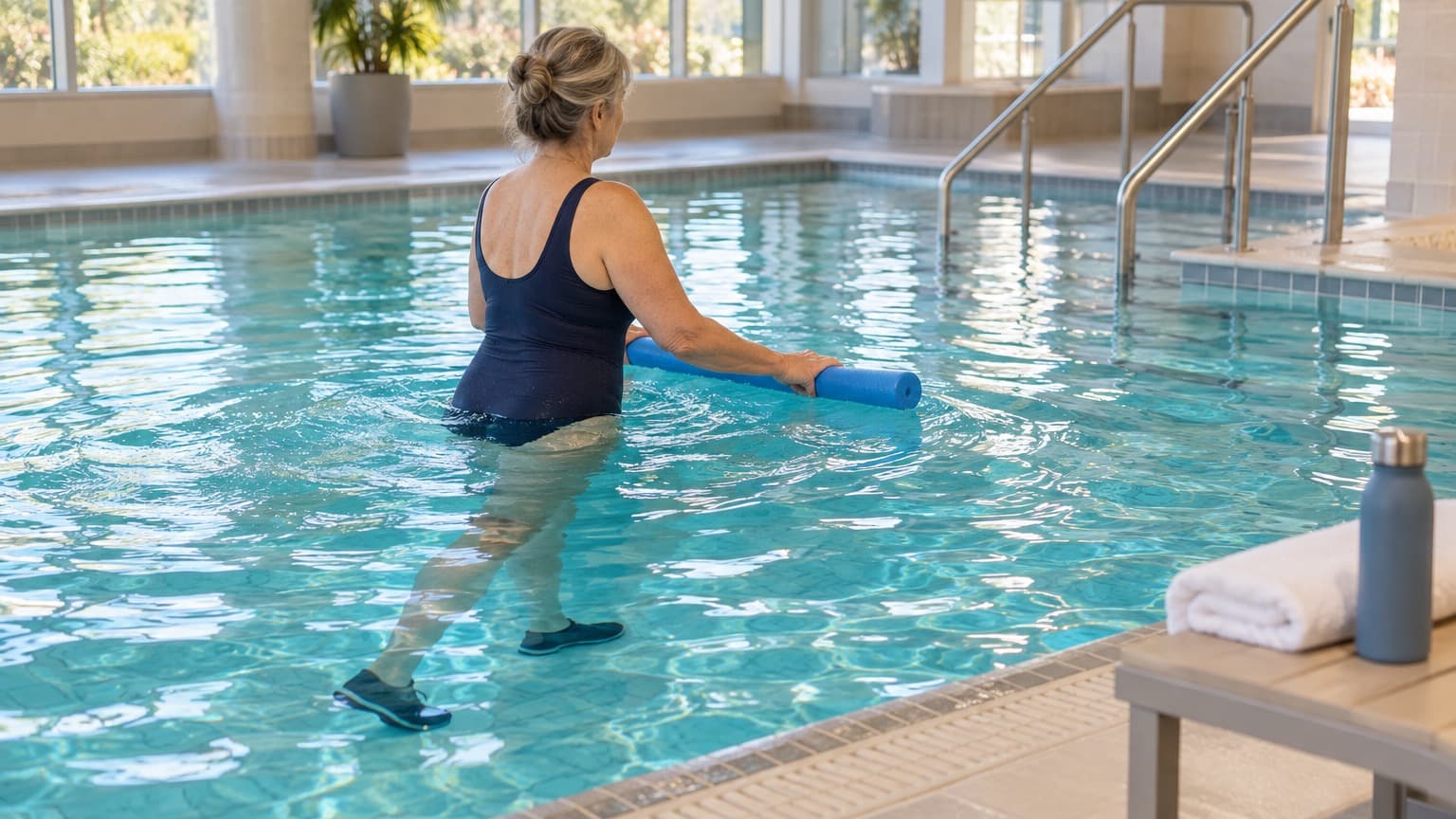
No, you don't need to know how to swim. Aquatic therapy is exercise in water, not a swimming lesson. At our Wallingford office, aquatic therapy takes place in a controlled therapy pool under the direct guidance of a physical therapist, and exercises are performed at depths where you can stand. Flotation support is used where needed.
For clothing, plan on a swimsuit you can move in, and pack the way you would for any trip to a pool.
How a pool session goes
A session at Omni isn't open swim time. Your physical therapist takes you through a structured program built around your evaluation.
A session looks more like walking than swimming laps. At Omni, each program is designed for you, to improve things like strength, flexibility, balance and the way you walk. A typical session may include a warm-up, exercises and a cool-down (opens in a new tab), with the length and intensity set to what you can do and what you're working toward. You might walk forward, backward or sideways through the water, or do gentle arm and leg movements, sometimes holding a foam noodle, wearing a float belt or pushing water dumbbells. The water's natural resistance makes for gentle strength training, and speed sets the difficulty: moving faster creates more resistance, and moving slower creates less. If something hurts, tell your therapist, who can adjust the plan.
Buoyancy supports your weight and takes stress off your joints, and the deeper you stand, the more of your body weight the water carries. Our therapy pool uses warm water, which helps muscles relax and can make movement less painful.
If you're uneasy in water, tell your therapist early
Not everyone has spent time in a pool, and aquatic therapy doesn't assume you have. At your evaluation, mention it if you can't swim, haven't been in a pool in years, or tense up around water, so your therapist knows before you get in.
If the thought of getting in frightens you, tell your physician too. The pool isn't the only way forward: at Omni, we evaluate whether the pool, a land-based program or a combination is the right path for your recovery. The differences are laid out in aquatic therapy versus land-based physical therapy.
What to wear and pack for a pool session
Bring a swimsuit and a bag for your clothes. We have changing rooms and showers to use before and after your session, but no lockers, so the bag keeps your things together. Water shoes aren't required, and our front desk will go over what to bring and wear before your first visit. Choose a suit you can step, bend and reach in without tugging it back into place.
Shower before you get into any pool. A one-minute shower removes most of the dirt, sweat and oils on your body that use up the chemicals a pool needs to kill germs. You can shower at home before you leave or in our showers before your session; after surgery, follow your surgeon's instructions about when you may shower.
Pack for the trip home, too. Clothes that pull on easily over damp skin help, and on a cold Connecticut day, so do a warm layer and a hat for the walk back to your car.
For your first visit at Omni, bring a photo ID, your insurance card, any referral or prescription from your doctor, and a list of current medications. If you're coming in after a car accident or a work injury, also bring your claim number, your adjuster's contact information and the date of the injury, plus your employer's information for a work injury. Plan on about an hour. If your first visit is on land rather than in the pool, wear comfortable clothing you can move in. Insurance and other first-visit questions are answered on our FAQ page.
Staying safe in the pool
After surgery, wait until your surgeon clears the incision. After a knee replacement, for example, discharge instructions say not to soak in a pool (opens in a new tab) until your doctor says the wound has healed enough (opens in a new tab). It's also a good idea to stay out while you have diarrhea or an open cut or wound (opens in a new tab), and if you have a weakened immune system, check with your doctor first. Aquatic therapy can be a very effective rehabilitation method, but it isn't appropriate for every patient or condition, so when in doubt, ask your physician or our physical therapy team.
If you feel chest pain, shortness of breath, or weak, light-headed or faint during a session, stop and tell your therapist right away.
Calling our Wallingford office
Aquatic therapy at Omni always requires a referral, just like physical therapy. Your physician can refer you to aquatic therapy directly. If you start with one of our chiropractors or with physical therapy instead, your physical therapist can recommend moving into the pool at your first evaluation if it would help, and a lot of our patients do a mix of land and pool sessions. Once you have your referral, call our Wallingford office at (203) 294-1998, and our staff will verify your coverage before your first visit.
If you have other questions about our pool, such as the water temperature or how you'll get in and out, our staff are glad to help when you call. If you'll need help changing or walking to the pool, ask whether someone should come with you.
The pool is at our Wallingford office, 8 Research Parkway, and care is available in English and Spanish. The office is at the front of the building: when you come in, our entrance is the first door on the right on the first (ground) floor.