
September 11, 2026
Aquatic or Land-Based Physical Therapy: Which Fits Your Needs?
When pain makes exercise on land difficult, aquatic therapy may help you get moving. How an evaluation at Omni guides the choice of pool, gym, or both.
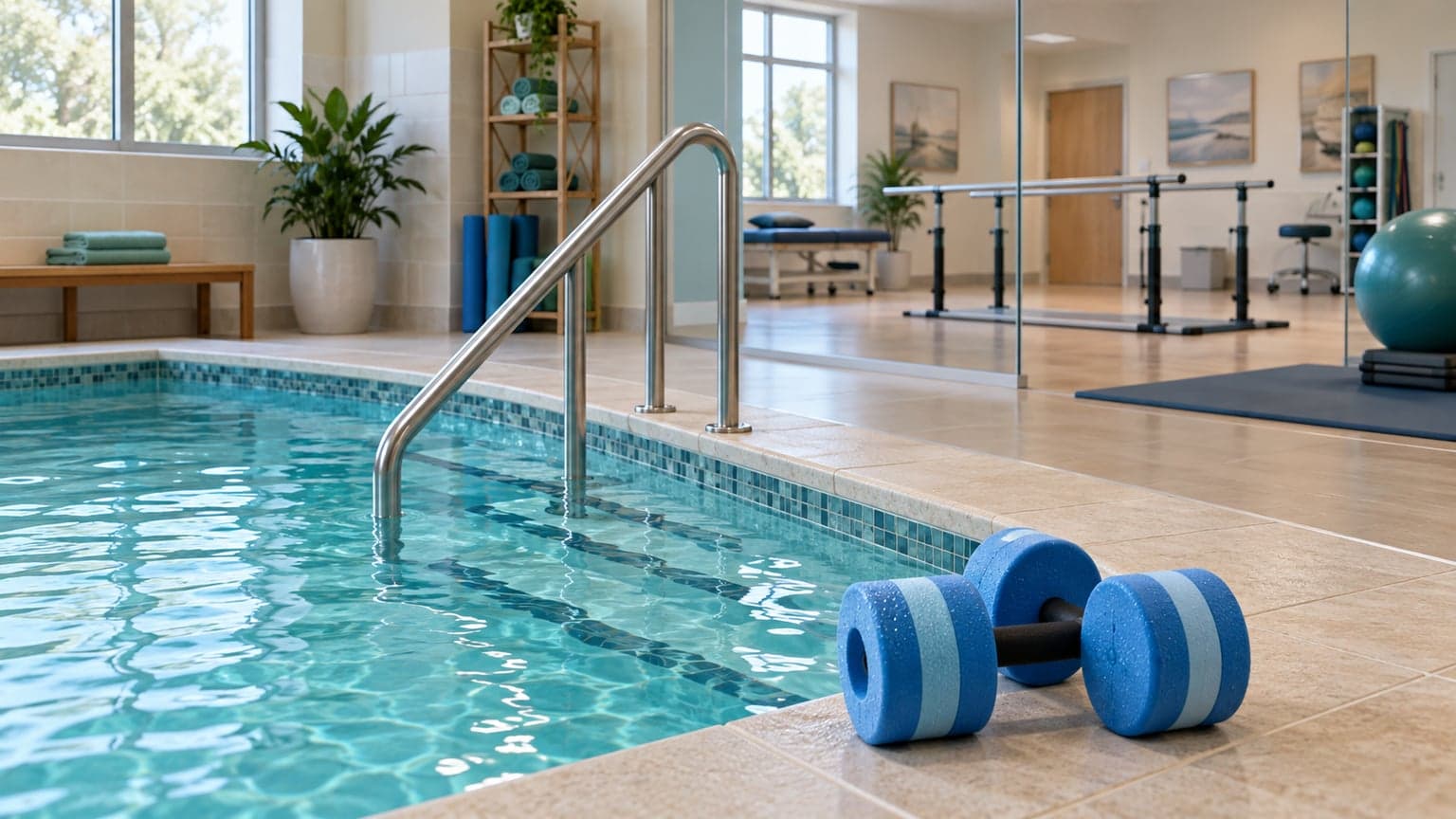
When pain makes standing or walking difficult, exercising in water may feel more manageable. Water supports part of your body weight and can reduce the load on sore joints while you work on movement and strength.
For some people, that support makes aquatic therapy a better fit for getting started with exercise. At Omni's Wallingford office, a physical therapist can evaluate your symptoms, medical history, and goals to recommend the warm-water pool, land-based therapy, or a combination.
When might aquatic therapy be a better fit?
Aquatic therapy may be a better fit when water’s support makes recommended exercises easier to tolerate. If standing exercises put too much strain on a sore knee or hip, for example, reducing that load may help you participate.
Brown University Health's physical therapy guidance (opens in a new tab) explains how buoyancy reduces stress on joints, warm water helps tight muscles relax, and water's resistance allows strengthening with less joint loading. Our article on why water helps painful joints explains them in more detail.
Arthritis, an orthopedic injury, or restrictions on weight bearing may make the pool worth considering. Omni's aquatic therapy service includes rehabilitation for orthopedic conditions and recovery from surgery, sports injuries, car accidents, and work injuries. Your evaluation determines whether pool exercise is appropriate for you. After surgery, your surgeon's restrictions still apply in the water.
What benefits have researchers found?
For knee osteoarthritis, a 2023 review of 22 studies (opens in a new tab) found that aquatic exercise improved pain, stiffness, and physical function compared with no exercise. Pain benefits were still present three months after treatment ended. While comparisons with land exercise found no statistically significant differences, water’s support may make exercise more manageable for someone who finds movement on land painful or difficult.
A small trial published in 2025 (opens in a new tab) found greater improvements in pain and function after eight weeks of aquatic exercise than land exercise in 60 people with knee osteoarthritis. It studied a specific program in a 26°C (79°F) pool; the exercises and session lengths differed between groups. Its findings add to the evidence for aquatic exercise, without establishing that every pool program will produce the same results.
Benefits have also been studied in chronic low back pain. A 2022 trial in JAMA Network Open (opens in a new tab) included 113 adults averaging 31 years old. Aquatic exercise improved pain and disability more than electrical stimulation and infrared heat, with benefits observed at the 12-month follow-up. In that study, the comparison treatment was electrical stimulation and infrared heat, so the findings do not establish how aquatic exercise compares with an active land-based program.
How does a therapist choose between aquatic and land-based therapy?
A therapist considers what you can comfortably do, your medical history, and the activities you want to get back to. Describe the movements that bother you: standing at the kitchen counter, getting out of a chair, or climbing the stairs at home. Tell the therapist what happens during activity and afterward, and bring any instructions from your physician or surgeon.
Omni's Wallingford facility has both a warm-water therapy pool and an outpatient physical therapy gym. The team can recommend exercises around your needs and goals. If exercise on land feels manageable, a land-based program may suit you. If pain makes those movements difficult, ask how the pool could help you participate.
Practical details matter too. Talk about your comfort in water, travel, pool availability, and what you can do at home. You can ask: Why do you recommend this setting? Which activities are we working toward? How will we decide whether to change the plan?
Can aquatic and land-based therapy work together?
A plan can include both pool and land exercises. University Hospitals Plymouth NHS Trust's hydrotherapy guidance (opens in a new tab) describes using the two alongside each other. Your therapist can explain whether that approach fits your goals.
Water offers support and resistance for exercise. Land-based therapy gives you a place to practice movements such as getting up from a chair or using stairs on solid ground. The mix can change as your needs change. Ask your therapist how each part of the program connects to the activities you want to resume. Omni's physical therapy page describes its land-based care.
What should you know before getting started at Omni?
Your clinical team needs to assess whether pool exercise is safe for you. Tell them about open wounds, fever or infection, heart or kidney conditions, and bowel or bladder control problems. These are among the concerns covered in University Hospitals Plymouth NHS Trust’s screening guidance (opens in a new tab). After surgery, ask your surgeon when you can enter a pool and which movement or weight-bearing restrictions apply. If new symptoms develop or a wound changes during treatment, contact your therapist before your next pool session.
Omni offers aquatic therapy and land-based physical therapy at 8 Research Parkway in Wallingford. Both services require a referral. If you need one, speak with your physician. Call (203) 294-1998 to ask about an evaluation and whether aquatic therapy could be a good fit for you.