
September 3, 2026
Why Water? How Aquatic Therapy Takes the Weight Off Painful Joints
Aquatic therapy uses buoyancy, warm water, and gentle resistance to reduce joint loading and make movement more tolerable for some people with joint pain.
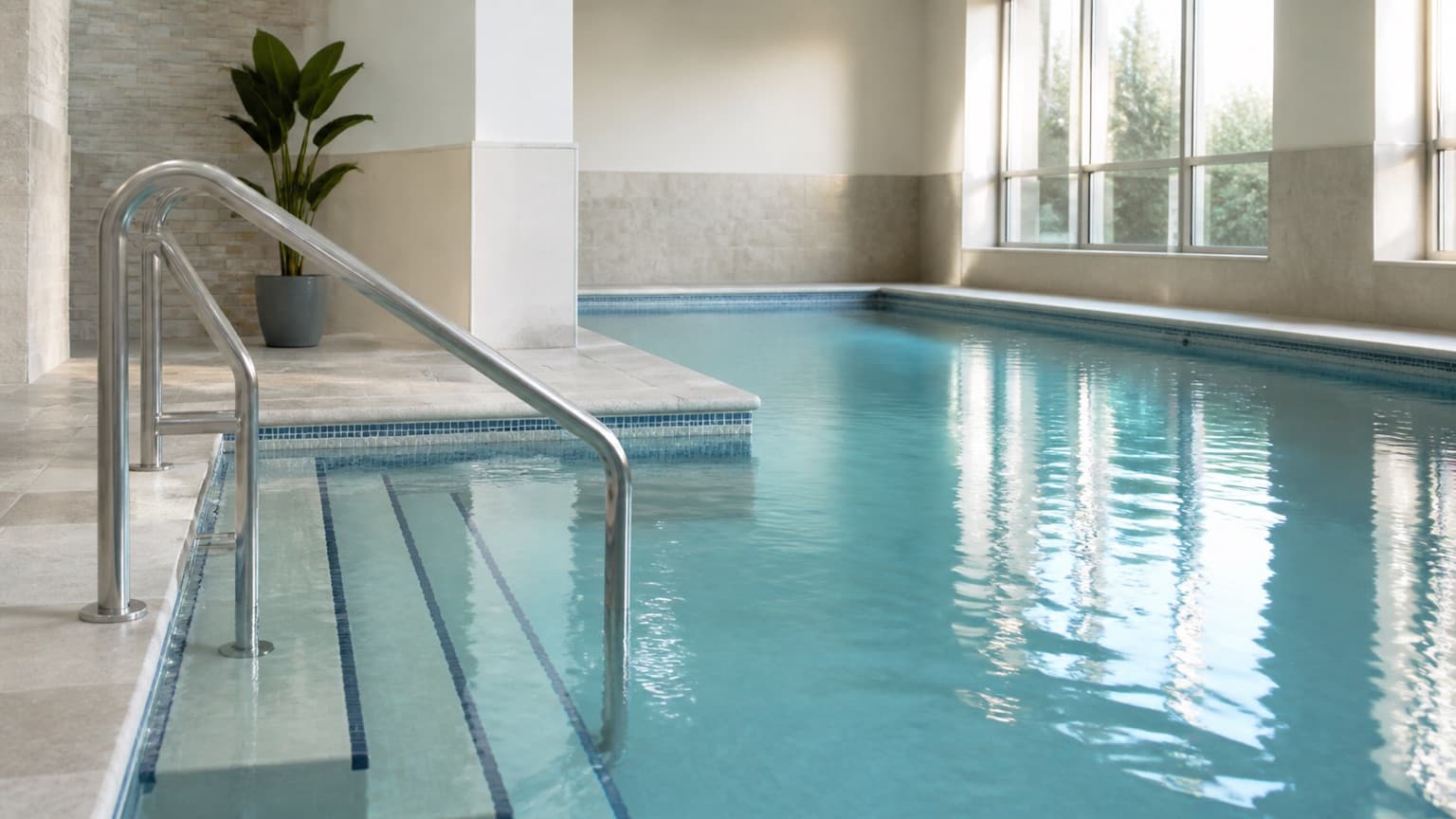
You are standing at the kitchen counter with your coffee, running the same calculation you run most mornings: can the knee take a walk today? Everyone from your doctor to your neighbor has told you the same thing. Keep moving. It's good advice, and it's hard to act on when moving is the part that hurts.
That trade-off, move and hurt or rest and stiffen, is a big part of why aquatic therapy exists. Step into a warm therapy pool and the physics change. The water carries a share of your body weight, so your joints bear less load while you are in it. The warmth helps loosen muscles that have been bracing against the pain. And the water pushes back gently in every direction, which means the same pool that makes movement easier also makes it count as exercise. For many people who cannot tolerate land exercise yet, water is a reasonable place to start.
How much weight does water take off your joints?
Standing in water takes a substantial share of your body weight off your hips, knees, and ankles, and the deeper you stand, the more it takes off. The APTA Academy of Aquatic Physical Therapy (opens in a new tab) relays the commonly used Aquatic Exercise Association depth figures: standing in water to waist depth takes roughly half your body weight off your joints, mid-chest depth roughly three quarters, and shoulder depth roughly nine tenths. A 2014 study in BMC Musculoskeletal Disorders (opens in a new tab) that measured this directly found people immersed to hip depth were carrying about 52 percent of their land weight.
The force doing that work is buoyancy, the upward push water exerts on anything in it. In practice, standing in chest-deep water means the knee is carrying a fraction of the weight it carries in the hallway. How deep you work is part of how much load comes off, which is one reason aquatic programs are run under a therapist's direction.
Why does warm water make it easier to move?
Warm water increases blood flow to sore muscles and encourages them to relax, which can help ease pain and stiffness enough that movement becomes possible. The Arthritis Foundation (opens in a new tab) makes this point in its guidance on water exercise for arthritis, describing warm water as something that relaxes muscles and helps ease pain. The physical therapy team at Brown University Health (opens in a new tab) describes the same mechanism from the circulation side: warmth brings more blood to the tissue you are asking to work.
This is why a therapy pool is not a lap pool. The Cochrane review of aquatic exercise for knee and hip osteoarthritis (opens in a new tab) describes the water used in these programs as typically around 90 to 97 degrees F (roughly 32 to 36 degrees C). Warmth is doing part of the work before the exercise starts, which is why many patients find they can start moving with less pain in water than on land.
Can you really build strength in a pool?
Yes, a pool can build strength, because the water itself supplies the resistance. Water has viscosity, meaning it is thick and it drags on anything moving through it. Water resists movement far more than air does, and that resistance grows the faster you move, which is why an arm sweep that feels like nothing in a hallway feels like real work in a pool.
Two things make that resistance useful in rehab. First, it scales with speed: move slowly and the water is gentle, move faster and it pushes back harder, so you control the intensity without ever touching a weight stack. Second, it works in every direction. On land, a bicep curl is resisted on the way up and assisted by gravity on the way down. In water, both halves of the movement meet resistance, so changing direction and speed changes the exercise.
Does aquatic therapy help arthritis and joint pain?
Research suggests aquatic exercise can help people with arthritis and joint pain, though the effect is modest rather than dramatic. A Cochrane review of 13 trials of aquatic exercise for people with osteoarthritis, the wear-related form of arthritis, in the knee or hip found small but clinically relevant short-term improvements in pain, disability, and quality of life. No serious adverse events related to aquatic exercise were reported in those trials. The average benefit was small, and results vary from person to person.
Public health guidance points the same direction. The CDC lists water exercise (opens in a new tab) among the joint-friendly activities it recommends for people with arthritis, within its general guidance of about 150 minutes of moderate activity per week. The CDC also notes that people are often able to exercise longer in water without the increase in joint and muscle pain they get on land. That is the endurance piece. It does not mean the pain is gone, but rather that many people can keep moving longer before it stops them.
Is aquatic therapy right for everyone?
No, aquatic therapy is not appropriate for every patient or every condition, and that call belongs with your provider rather than with an article. Some medical conditions make pool work a poor fit, some goals are better served on land, and an evaluation is how that gets sorted out. After an evaluation, a therapist may recommend aquatic therapy, land-based physical therapy, or both.
There are also situations where the first step is not exercise at all. Severe, unexplained joint pain and swelling, especially with other unexplained symptoms, or joint pain with a fever, is a reason to contact a healthcare provider promptly. Joint pain that lasts more than several days (opens in a new tab) should be evaluated before you begin any exercise program, in water or out of it. Getting the diagnosis right comes first.
What does aquatic therapy at Omni look like?
Omni's aquatic therapy program runs in the warm water therapy pool at our Wallingford, CT office at 8 Research Parkway. Sessions are not open swim. A physical therapist guides a structured program built around your evaluation and what you're trying to get back to, whether that's the stairs at home, getting in and out of the car, or a walk around the block without paying for it the next day.
You don't need to know how to swim. The work happens at standing depth, under the direct guidance of a physical therapist, and flotation support is used where needed. If your longer term goal is getting back into a pool on your own, our post on swimming safety covers what to keep in mind once you are there.
Aquatic therapy at Omni always requires a referral, the same as physical therapy. If you don't have one, ask your physician, then call our Wallingford office and our staff will take it from there.
If joint pain is keeping you from staying active, contact Omni at (203) 294-1998 to ask whether aquatic therapy is a good fit for you. We can talk through what you're experiencing and what an evaluation would involve.