
October 23, 2026
Trick-or-Treating After Dark: How Can You Avoid a Fall?
Walking a trick-or-treat route after dark? How to handle curbs, wet leaves, porch steps and costumes without a fall, and what to do if someone does go down.
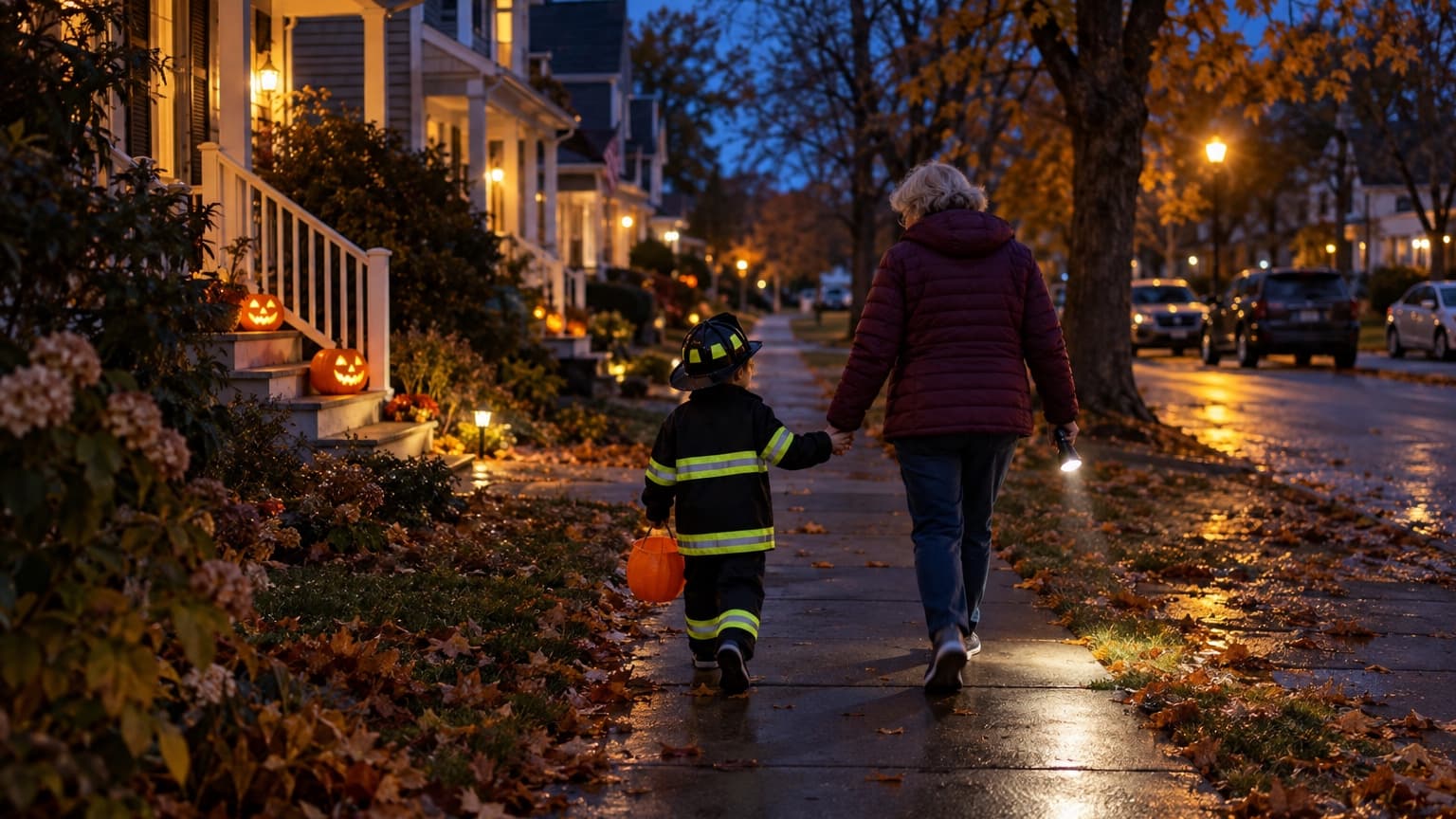
More than half of the people treated in U.S. emergency departments for Halloween injuries were adults, not children. In the most recent Consumer Product Safety Commission estimate, released in October 2022, 54 percent of those injured were 18 or older (opens in a new tab), and one in four of all the injuries came from falls, including tripping on costumes and walking while trick-or-treating.
Picture the route on Halloween night in East Haven, Milford or West Haven. The people walking door to door include a lot of parents and grandparents, often carrying a bag, a flashlight and sometimes a tired four-year-old, on sidewalks and front steps they may never have seen in daylight. To lower your chance of a fall, wear nonskid, low-heeled shoes, carry a light, keep a hand free for railings and take unfamiliar steps slowly. If anyone in your group has been feeling less steady over the past few weeks or months, Omni offers balance checks at all five of its offices.
Why is a trick-or-treat route harder to walk than it looks?
A trick-or-treat route stacks up fall hazards: darkness, unfamiliar ground and attention pointed anywhere but your feet. Many falls at home come from slippery or wet surfaces, poor lighting, inadequate footwear, lack of handrails and cluttered pathways (opens in a new tab), and on an October evening in Connecticut you'll find every one of them outdoors.
Wet leaves cover the edge of a curb. A brick walkway has a heaved section that a porch light doesn't reach. Front steps vary from house to house in height and depth, and plenty of them have no railing. Meanwhile you're watching the kids, the cars and the doorways, not the ground.
Your own body matters too. Most falls come from a combination of risk factors, and the more of them a person has, the higher the chance of falling. The CDC lists several risk factors that can be changed, including lower body weakness, difficulties with walking and balance, vision problems, foot pain or poor footwear, and some medicines (opens in a new tab), such as sedatives and even some over-the-counter drugs. Falling once doubles the chance of falling again, and each year more than one in four adults 65 and older has a fall.
How should you get ready for a trick-or-treat walk after dark?
For a walk after dark, start with nonskid, rubber-soled, low-heeled shoes (opens in a new tab) that support your feet, then make sure every costume fits and can be seen. Leave the costume boots, heels and slippers at home, or save them for the party. If you wear glasses for distance, wear them, and if you just got a new pair, give yourself time to get used to them before a night of steps and curbs.
Look over the costumes in the group, yours included, and avoid overly long or baggy costumes to prevent trips and falls (opens in a new tab). Masks should have eye holes big enough for full visibility, and face makeup may be a safer choice than a mask. Reflective tape on costumes and coats, a brightly colored outfit, and a flashlight or glow stick help others see you and help you see the walkway.
Carry the candy in a shoulder bag or small backpack so one hand is free for railings, and hold the flashlight in the other, pointed at the ground a few steps ahead.
Before you head out, put a charged phone in your pocket, and agree on a meeting point and a time to head home. If anyone in the group has been unsteady lately, plan a shorter loop on streets with sidewalks and good lighting, and think about walking it once in daylight that afternoon. Knowing where the heaved slabs, missing curb ramps and steep driveways are makes the evening walk easier.
How do you handle curbs, porch steps and street crossings in the dark?
Slow down, find each edge with your light and use the railing when there is one. At the top of each set of steps, stop for a second and find the first edge before you start down.
On porch steps, step all the way onto each tread rather than catching the edge with your heel. If a house has a long or dark set of stairs, there's no rule that says everyone has to climb them. One adult can wait at the bottom with the younger kids. Skip houses with dark, cluttered or leaf-covered walkways altogether. There's always another porch light down the street.
Wet pavement and wet leaves can both be very slippery, and leaves can hide the edge of a step or curb. Walk around a pile of leaves rather than through it.
At the street, cross at crosswalks or intersections when you can, and look for cars in all directions, including those turning left or right (opens in a new tab). Drivers on Halloween may be watching for children darting out and miss an adult stepping off a curb. Walking in a group with a buddy system also means someone is close by if a person trips.
What if you use a cane or walker, or your balance isn't what it was?
If you need a cane or walker to feel steady, bring it. Using one correctly can help prevent falls. If it's borrowed, ask your healthcare provider to make sure it's the right size and safe to use. That matters most where you don't know the area or the walkways are uneven, which describes most trick-or-treat routes. Check that walker wheels roll smoothly before you go.
If you've been feeling less steady over weeks or months, let someone else handle the long stairways, and bring it up with your healthcare provider rather than waiting for a fall. A physical or occupational therapist can help you decide which devices might be helpful and teach you how to use them safely. Omni can help with unsteadiness too, through balance training at all five offices and physical therapy at the Wallingford office. Sudden trouble walking, dizziness or loss of balance is different. It can be a sign of a stroke (opens in a new tab), so call 911 right away.
Some people who fall become afraid of falling and cut back on everyday activities, and being less active can make them weaker and more likely to fall. Planning a route you can manage lets you stay part of the evening.
What should you do if someone falls?
Stay calm and don't rush anyone back to their feet. The person who fell should take a few breaths, stay still for a moment and decide whether they're hurt, because getting up too quickly or the wrong way can make an injury worse. If they're hurt or can't get up on their own, ask someone for help or call 911 (opens in a new tab).
If you think a hip, pelvis or upper leg may be broken, which can show up as being unable to put weight on the leg, call 911 (opens in a new tab) rather than helping the person up. Otherwise, if they think they can get up safely without help, they can roll onto one side, rest, come up slowly onto hands and knees, and crawl to a sturdy chair, then sit down in it before trying to stand.
Watch for a head injury. Call 911 or go to an emergency department right away if, after hitting their head, someone has a headache that gets worse and doesn't go away, vomits repeatedly, has slurred speech, weakness or numbness, a seizure or confusion, passes out, or is very drowsy or can't be woken up (opens in a new tab).
Even without those signs, an older adult who falls and hits their head should see a doctor right away (opens in a new tab) to make sure there's no brain injury, especially if they take a blood thinner. Don't wait until morning to see how they feel.
Falls can also break other bones, like the wrist, arm or ankle. A wrist that's swelling and painful after someone caught themselves may not be an emergency but still deserves prompt medical attention. Call your provider to find out where and when to be seen.
Does walking after dark stay risky after Halloween?
Yes, because the same hazards come back on every evening walk once the clocks change. Daylight saving time ends at 2 a.m. on Sunday, November 1 (opens in a new tab), the morning after Halloween, and from then on many evening dog walks, errands and commutes home happen after dark.
The same habits carry over: good shoes, a light, an eye on wet leaves and uneven pavement, and a slower pace on unfamiliar steps. If you're decorating this year too, our post on ladder safety for Halloween and holiday decorating covers the other big seasonal fall risk.
How can Omni help with balance and fall risk?
Omni can measure your balance and build a plan to improve it at any of its five offices. If your doctor recommends physical therapy, the Wallingford office treats balance and fall risk too. Our post on balance training and fall prevention explains what the research says and what an evaluation involves.
Performance & Balance Training, which Omni calls ProPerformance, is offered in East Haven, Meriden, Milford, Wallingford and West Haven, in English and Spanish. It starts with a computerized balance evaluation that takes about five minutes and gives you a balance score, and your provider reviews the results with you before any training begins. No referral is needed. It's a self-pay service and isn't billed through insurance, so contact your Omni office for session pricing.
Physical therapy at Omni is offered at the Wallingford office and always requires a referral. If you don't have one yet, ask your physician, then call our Wallingford office and our staff will take care of the rest.
Call Omni at (203) 562-8600 or request an appointment to ask which option fits. Have a safe Halloween.