
October 2, 2026
Decorating for Halloween and the Holidays: How Can You Stay Safe on a Ladder?
Hanging Halloween or holiday decorations? How to set up and climb a ladder safely, when to hand the job off, and what to do after a fall.
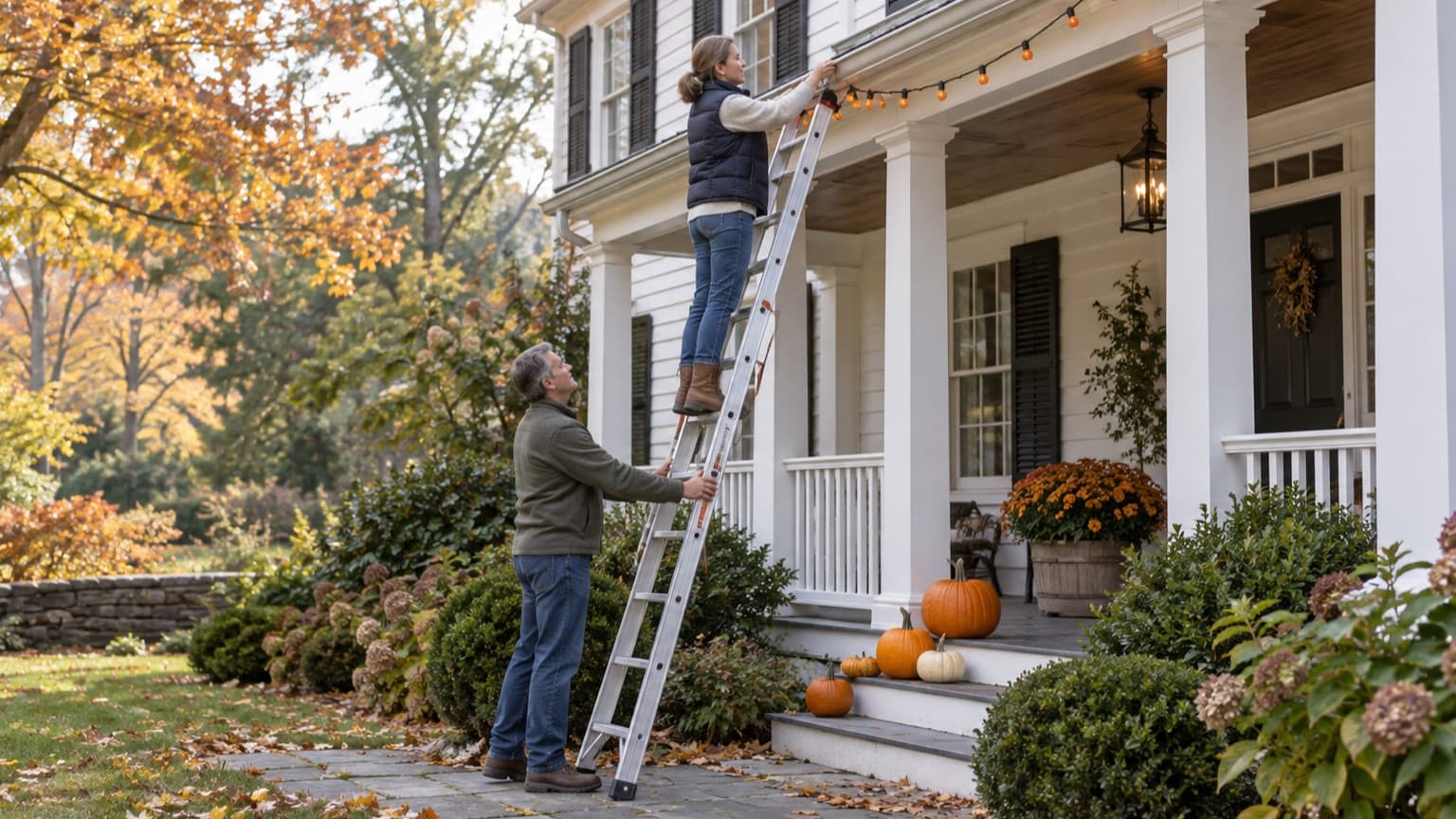
The skeleton needs to go on the porch roof, the orange lights belong along the gutter, and the fake cobwebs have to reach the top of the front window. By mid-October, a lot of Connecticut front yards get decorated from the top of a ladder. The same ladder often comes back out in November and December for the holiday lights, and most of this advice applies then too.
Decorating is supposed to be the fun part of the season, and a ladder injury is a quick way to spoil it. That's why it's worth taking a few minutes to pick the right ladder, set it up properly, and decide which jobs to hand off to someone else. If you do fall, the sections further down cover what to do in the first few minutes.
How common are Halloween and holiday injuries?
The U.S. Consumer Product Safety Commission estimated an annual average of 3,200 Halloween-related injuries treated in emergency departments (opens in a new tab) over the three years before its October 2022 report. A quarter of those injuries were falls, a group that includes falls while putting up or taking down decorations, tripping on costumes, and falls while trick-or-treating.
The winter holidays bring more. In its November 2024 release, the Commission estimated about 160 Christmas decorating-related injuries a day during the holiday season, nearly half involving falls (opens in a new tab). From November 2022 through January 2023, about 14,900 people were treated in emergency rooms for holiday decorating injuries.
Of course, ladder injuries aren't limited to the holidays. More than 580,000 ladder-related injuries required medical treatment in 2018 (opens in a new tab), and the most common are cuts, bruises, and fractured bones.
How do you choose the right ladder?
Choose a ladder that's the proper length for the height you need to reach. Indoors, that's usually a low stepladder. Outdoors, you may need a taller stepladder or an extension ladder.
Don't plan on standing at the very top. On a stepladder, the highest standing level should be two steps down from the top. On a single or extension ladder, never stand above the third rung from the top. Also check the ladder's working load, meaning how much weight it can hold. Don't forget to count any decorations or tools you're carrying along with your own weight.
Once you've picked your ladder, look it over before you climb. Don't use one that's damaged, bent, or missing parts, and check for loose screws, hinges, or rungs. Clean off mud, grease, or anything slippery. If a part is broken or missing, replace it or use a different ladder, since a quick fix could fail while you're high off the ground.
How should you set up the ladder?
Set the ladder on stable, even ground. Outdoor ground can be soft, muddy, or bumpy, so check the spot before you start. Keep the ladder away from electrical wires and tree limbs, and look for overhead power lines before you carry it into place. A metal ladder shouldn't be used near power lines at all.
For an extension ladder, use the 4-to-1 rule: for every 4 feet the ladder rises, its base should be 1 foot out from the wall (opens in a new tab). So a ladder that touches the house 16 feet up should have its feet about 4 feet from the wall. If the feet are too close to the wall, the ladder can tip backward, and if they're too far out, it can slide out from under you. If you plan to step onto the roof, the ladder should extend 3 feet above the roofline.
If you're using a stepladder, make sure it's fully open, with the braces between the two sections extended and locked. Don't set any ladder on boxes, countertops, or other unstable surfaces to get extra height. If the ladder you have isn't tall enough, use a taller one or leave that spot undecorated.
How do you stay safe while you climb and hang decorations?
Start with lace-up shoes or boots with clean soles. Skip sandals, flip-flops, and slippery leather soles. Tie your laces securely and make sure your pant legs don't hang under your shoes.
Face the ladder as you climb, stay in the center, and keep three points of contact: two hands and a foot, or two feet and a hand. Once you're up, keep your bellybutton between the side rails. Leaning too far to one side or reaching too far overhead can make you lose your balance. If the next clip or hook for your lights is out of reach, climb down and move the ladder closer instead of stretching for it.
Have someone nearby while you climb. Only one person should be on a ladder at a time, and no one should be on one in high winds. If you tire easily, have fainting spells, or are taking medication or drinking alcohol that can make you dizzy or drowsy, stay off the ladder and wait for another day or ask for help.
Do as much of the job as you can on the ground first. It's hard to keep three points of contact with a strand of lights in one hand, so untangle the lights, test them, and decide where each hook goes before you climb. You'll spend less time reaching and adjusting at the top.
Is taking decorations down any different?
Taking decorations down calls for the same ladder precautions as putting them up, and the Halloween injury figures above include falls during takedown.
What usually changes is the weather. Halloween decorations tend to come down in November, when it's colder than when they went up, and holiday lights often stay up into January. By then, the ground may have frozen and thawed enough times to turn bumpy, so check the spot where the ladder will stand, even if it was fine when the lights went up. Clean any mud or snow off the ladder before you climb.
How can you reduce trip hazards around your home?
Clear obstacles from lawns, steps, and porches before trick-or-treaters arrive. Extension cords, pumpkins on the steps, and decorations along the walkway can all trip someone after dark. Battery-operated lights instead of candles also cut down on fire risk.
When should you hand the job off?
Hand the ladder work to someone else if you've fallen before or feel unsteady on stairs. According to the CDC, more than one out of four adults 65 and older fall each year, but less than half tell their doctor (opens in a new tab). Falling once doubles the chances of falling again.
Tell your provider about any fall, even one that didn't hurt at the time. Our article on balance training and fall prevention explains how balance can be assessed and trained.
What should you do if you fall from a ladder?
Call 911 after a ladder fall (opens in a new tab) if the person isn't responding or is passing out, may have a broken bone in the head, neck, back, hip, pelvis, or upper leg, is bleeding severely, or has a bone sticking out through the skin. Also call if the skin below an injured joint looks pale, cold, clammy, or blue, or if you can't keep the injured area still on your own. Other broken bones may not be emergencies, but they still need prompt medical attention. Don't move a person who may have a spine injury. If that could be you, stay still and have someone call for help.
After a blow or jolt to the head, the people with you should call 911 or take you to an emergency department if you show concussion danger signs (opens in a new tab). These include a headache that gets worse and doesn't go away, repeated vomiting, slurred speech, weakness or numbness, a seizure, confusion, passing out, or looking very drowsy or unable to be woken up. The linked CDC page has the full list.
If you're 65 or older and hit your head in a fall, see your doctor right away (opens in a new tab) to make sure you don't have a brain injury, even without the danger signs above. Head injuries can be especially serious for people taking certain medicines, such as blood thinners.
If your back hurts after a fall, don't wait it out. Back pain after a severe blow or fall (opens in a new tab) is a reason to contact your provider right away.
If none of that applies, stay calm, check whether you're hurt, and get up slowly if you're able. If you feel intense pain, weakness, or dizziness as you start to get up, sit or lie back down. If an injury keeps you from standing or walking, call for help. If you're not hurt, rest and collect yourself before you climb again.
How can Omni help after a fall or a sore decorating day?
Omni can evaluate back or shoulder pain and talk with you about whether treatment makes sense. If your shoulder has ached since you hung the lights, or your back has been stiff since you carried the storage bins, tell us when it started and which movements have gotten harder. If you have any of the warning signs above, get that medical care first.
Omni offers both chiropractic care and physical therapy, but the right treatment for you will depend on your symptoms and your exam. Physical therapy at Omni requires a physician's referral.
If falls or feeling unsteady are the bigger worry, Omni's ProPerformance program starts with a quick, painless balance evaluation. It's offered at all five offices and doesn't require a referral.
Call Omni at (203) 562-8600 or request an appointment. The team can help you arrange an evaluation and confirm where your recommended services are available.