
October 7, 2026
Heat or Ice: Which Should You Use for a Sore Muscle or a Fresh Sprain?
Ice or heat? When to use each for a fresh sprain, a strained muscle, or a stiff back or neck, how long is safe, who should be careful, and when to get care.
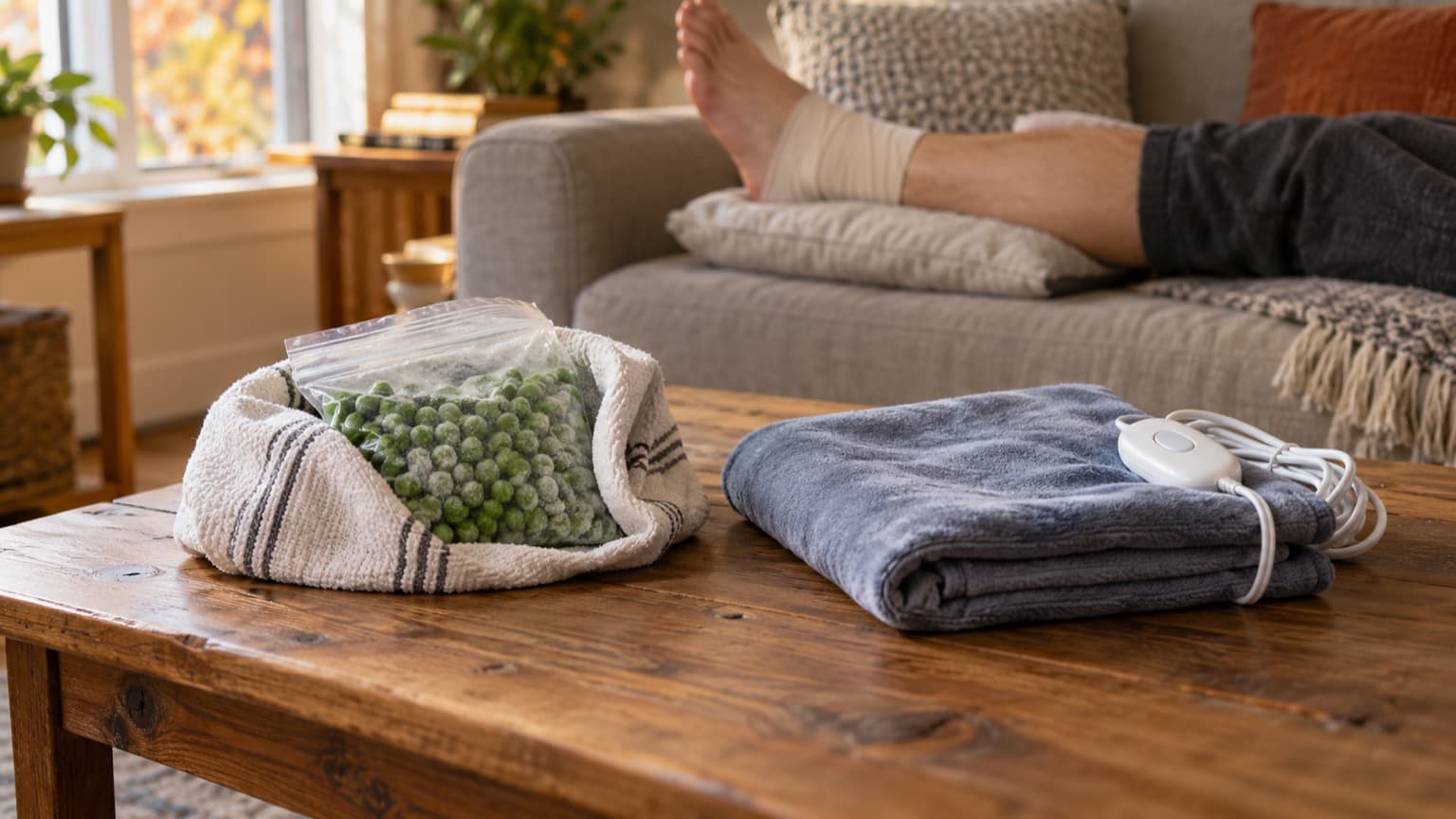
Use ice for a fresh strain or sprain, especially one that's swelling. Use heat for muscles or joints that feel stiff and tight when there's no new injury behind it. That's the short answer, and it covers most everyday aches.
The harder calls are the ones in between. This time of year in Connecticut, that might be an ankle you rolled on wet leaves and aren't sure about, or a back that's still stiff two days after stacking firewood.
When should you get a sprain or strain checked instead of treating it at home?
Go to the hospital right away or call 911 (opens in a new tab) if you think a bone is broken, the joint looks out of position, you have a serious injury or severe pain, or you heard a pop and right away had trouble using the joint. The same goes for a pulled muscle you can't move at all, or an injury that's bleeding. Call 911 too if the skin below an injured joint turns pale, cold, clammy, or blue.
Not being able to put weight on your leg, knee, ankle, or foot, or move a joint normally (opens in a new tab) is a sign of an acute injury. If that happens, for example with a sprained ankle you can't stand on, see your doctor as soon as possible. Also call your provider if walking is very painful, if the ankle doesn't feel any better after 5 to 7 days, if it keeps feeling weak or gives way easily, or if it becomes numb or tingly or keeps getting more discolored (opens in a new tab). And call if the swelling hasn't started to go down within 2 days, or if you notice red, warm, painful skin or a fever over 100°F, which can be signs of infection.
If it's your back that hurts, get emergency care right away (opens in a new tab) if you have new trouble passing urine or controlling your bladder or bowel, or severe or worsening numbness, tingling, or other problems in your legs, especially changes in feeling between your legs, over your buttocks, or in your inner thighs or the backs of your legs. These can be signs of a surgical emergency. Our article on back pain after fall yard work covers those signs and the back pain symptoms where you should call your provider right away.
Why is ice the first choice for a fresh injury?
Ice is the usual first choice because cold narrows the blood vessels in the area, which can numb pain, calm inflammation, and limit bruising. That's why it can help right after you roll an ankle, pull a muscle, or bump into something hard.
Hold off on heat for now. Using heat in the first days after an injury can increase inflammation and make it worse (opens in a new tab).
How long should you ice, and how often?
For a strained muscle, ice for 10 to 15 minutes every hour on the first day, then every 3 to 4 hours after that (opens in a new tab), starting as soon as you can after the injury. Keep using ice for the first 3 days. After that, either heat or ice may help if you still have pain, though heat is best saved for after the swelling has gone down.
Wrap the ice or cold pack in a cloth instead of putting it right on your skin. A bag of frozen peas works well because it molds around an ankle or knee.
You'll see slightly different session lengths depending on where you look. Some guidance allows up to 20 minutes out of each hour, but not more than 20 minutes at a time (opens in a new tab). If you aren't sure, 10 to 15 minutes is usually enough. Keep it shorter on small joints like your fingers and on sensitive areas like the groin.
What else helps a fresh sprain besides ice?
Rest, a snug wrap, and keeping the joint raised are the other first-aid steps for a fresh sprain. Rest the joint for several days and avoid putting stress on it, because that can make the injury worse. Wrap a bandage around the area to limit movement, firmly but not tightly. When you're sitting or lying down, keep a swollen ankle or knee raised above your heart.
Most mild sprains heal in 7 to 10 days, while a bad sprain can take several weeks for the pain and swelling to go away.
When is heat the better choice?
Heat is usually the better choice for muscles and joints that feel stiff or tight when there's no fresh injury or swelling. Warmth increases blood flow, which helps tight muscles relax and can help a stiff joint move more easily.
Common examples are neck and shoulder muscles that tighten up when you're tense, muscles that knot up after you've overdone it, or joints that are stiff from arthritis.
Heat also fits the later stage of a strain or sprain. Once the swelling has gone down and the area feels more stiff than sore, switching to heat can help with that stiffness. A back you just tweaked can follow the same pattern: for new low back pain, one good approach is ice for the first 48 to 72 hours, then heat.
A warm shower or bath counts as heat too. Keep the water warm rather than hot, between 92 and 100 degrees Fahrenheit (opens in a new tab).
How long can you safely use heat?
Use heat for about 10 to 15 minutes at a time, then take it off (opens in a new tab). You can use it on and off through the day for as long as it helps.
Put a cover or cloth between the heat and your skin, and take it off if the area gets uncomfortably warm. Heating pads can cause severe burns if they get too hot or stay on one spot too long (opens in a new tab), so never fall asleep with one on. If you're buying one, look for an automatic shutoff or timer, especially if there's any chance you'll doze off.
Can you use heat and ice on the same day?
Yes, for stiff joints without a fresh injury or active swelling, using both on the same day can work well. Heat before exercise can warm up your muscles and loosen your joints, and ice afterward can ease soreness and inflammation. Skip the ice right before exercise, though, because cold can make your muscles stiffen.
With arthritis, it's fine to try both and use whichever helps more. Some people use heat in the morning and cold later in the day. If a joint flares up and is swollen and warm, ice is usually the better pick. For everyday stiffness, heat may work better.
Who should be careful with heat or ice?
People who can't feel heat or cold normally need to be the most careful with both. Nerve damage (neuropathy), a common complication of diabetes, and Raynaud's syndrome can dull how much cold you feel, which makes it easy to leave ice on too long.
Heat carries the same risk. If you have diabetes, don't use a heating pad or hot water bottle on your feet (opens in a new tab). The skin may not respond normally to heat, and severe burns can happen.
Guidance written for clinicians also lists poor circulation, open wounds, and reduced feeling in the area (opens in a new tab) as reasons to avoid both heat and cold treatments. It also lists Raynaud's as a reason to avoid cold, so if you have Raynaud's, check with your provider before using ice at all. For heat, it adds others, including infection and bleeding disorders. The same guidance includes people who have trouble communicating, such as someone with dementia. If you're putting heat or ice on a parent or spouse who may not be able to tell you it's too hot or too cold, check with their provider first.
If any of this applies to you, check with your provider before using heat or ice. They can tell you whether it's safe and how to use it.
What if heat and ice aren't helping?
If neither heat nor ice is easing the pain, it's time to see a healthcare provider for an exam. Heat and ice can make you more comfortable while you heal, but they aren't cures. For a sprain or strain, also call your provider if the pain hasn't gone away after several weeks.
If a strain or sprain is slow to improve, or the same muscles keep tightening up, it may be time for more than an ice pack and a heating pad. After a sprain, physical therapy can help you regain motion and strength in the injured area.
Sprains and strains are among the conditions Omni's chiropractors treat. Chiropractic care is available at all five offices (Tuesdays and Thursdays in Wallingford) and doesn't require a referral, though some insurance plans require one for coverage. If you were hurt playing a sport, Omni's sports medicine care also treats sprains, strains, and muscle pulls. Whether sports medicine care needs a referral depends on who provides it: chiropractic-led care doesn't, and physical therapy always does.
Physical therapy is offered at the Wallingford office and always requires a physician's referral. If you don't have one yet, ask your physician, and Omni's staff can take care of the rest when you call. Omni's physical therapists may use heat or cold alongside exercise and other treatments, in a plan of care designed around your needs and goals. Tell your provider how you've been using heat and ice at home. Your chiropractor or physical therapist can tell you whether that routine still makes sense or should change as you recover.
Call Omni at (203) 562-8600 or request an appointment to ask about a strain, sprain, or stiffness that isn't getting better. The team can help you arrange an evaluation and confirm where your recommended services are available.