
September 30, 2026
Raking, Mowing, and Fall Cleanup: Why Does Your Back Pay for It?
Back sore after raking or mowing? Practical fall cleanup advice, what to do in the first few days, warning signs, and what to discuss at an Omni evaluation.
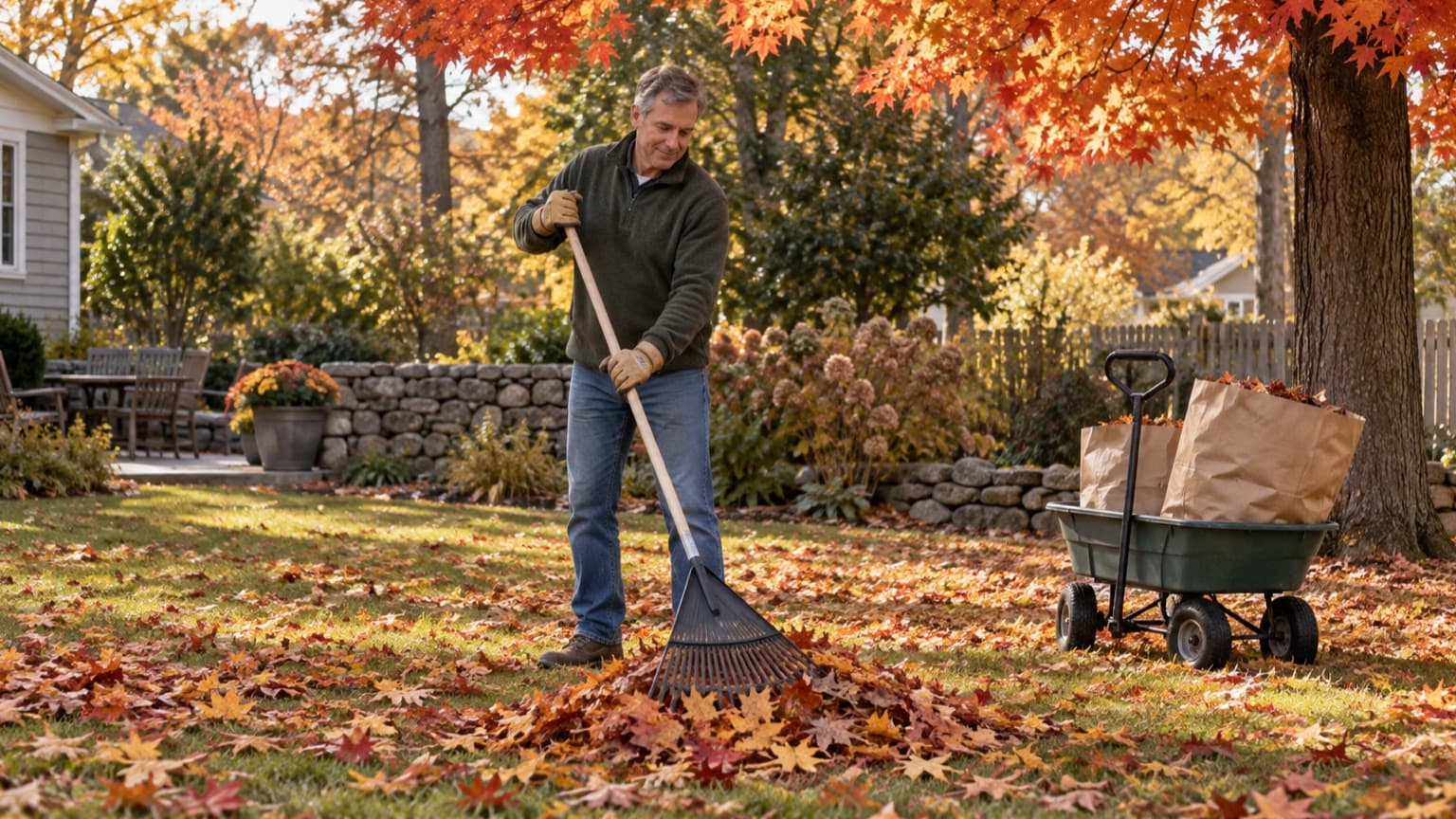
The first bags of leaves are lined up by the driveway, and the back corner of the yard still needs work. You keep going because rain is coming. By evening, getting up off the couch takes two tries.
Most of us don't rake, bag, and haul for hours the rest of the year, so a big cleanup day can catch your back off guard. A few changes to how you rake, lift, and pace the job may help. And if your back already hurts, the sections below cover when back pain needs medical attention and what to do in the meantime.
Why can raking leave your back sore?
Raking is the same reach, bend, and pull over and over, usually for longer than you planned. The repeated twisting can stress the lower back, and your shoulders and arms are doing a lot of the work too. Back pain is also more likely when you overdo it after being inactive for a while (opens in a new tab), like on the first big cleanup day of the season.
Should you warm up before yard work?
Yes. Treat raking like a workout, which means warming up and stretching first. Most people don't think of it that way, so they go straight from the kitchen table to a full afternoon in the yard. The next morning, their back lets them know that was a mistake.
Warm up before you lift anything heavy, too. A full leaf bag counts. Before you start, decide where the bags will go so you aren't hauling them across the yard.
If you have a back condition, a recent injury, or another health problem that limits what you can do, check with your provider before a big cleanup day.
How can you make raking and bagging easier on your back?
Keep the rake close to your body, let your arms and shoulders do the work instead of twisting your back, and switch which hand is on top as you go. Use a rake that fits your height, and move heavy bags with a wagon or wheelbarrow instead of carrying them.
A full leaf bag is often heavier and more awkward than it looks. To lift it, spread your feet about shoulder width apart, use your legs to lift rather than your back (opens in a new tab), and hold the bag as close to your body as you can. Don't twist your back while you reach for, lift, or carry the bag. If one seems too heavy or awkward, get help with it, or fill the next one only halfway.
It's also a good idea to take a break about every 20 to 30 minutes (opens in a new tab) and to split the job over a few days if you can. Gloves and supportive shoes help too.
Pick a stopping point before you begin, like the front walk or the side yard, and then actually stop there. If someone is helping, decide ahead of time who's carrying the bags and where they're going.
What about mowing the lawn?
If mowing bothers your back, pay attention to which part hurts: starting the mower, pushing it, or steering it around the yard. That detail is useful if you end up seeing someone for the pain. Don't push through pain just to finish the lawn.
If mowing doesn't bother your back, there's an upside this time of year: you may not have to rake every leaf. Mowing over the leaves each time a thin layer covers the grass (opens in a new tab) chops them into small pieces that can stay on the lawn and return nutrients to the soil. That means fewer bags to fill and carry.
What if the job includes gutters or a ladder?
Gutters mean a ladder, and a fall from a ladder can do far more damage than a sore back. The American Academy of Orthopaedic Surgeons reports that more than 580,000 ladder-related injuries required medical treatment in 2018 (opens in a new tab), citing U.S. Consumer Product Safety Commission data.
To lower your chances of a fall, start by setting the ladder on stable, even ground. Place an extension ladder 1 foot out from the wall for every 4 feet it rises, face the ladder while you climb, and grip both rails. Keep your bellybutton between the side rails. If you can't reach the next stretch of gutter, climb down and move the ladder instead of leaning out for one more handful of leaves. Wear lace-up shoes or boots with clean soles, have someone nearby while you climb, and skip the job in high winds.
If your balance isn't what it used to be, or you've fallen before, the gutters may be a job to hand off. Our article on balance training and fall prevention explains how balance can be assessed.
When does back pain need medical attention?
Seek emergency care if back pain comes with new trouble passing urine or controlling your bladder or bowel. Numbness, tingling, or other problems in your legs that are severe or getting worse also need emergency assessment, especially numbness between the legs, over the buttocks, or in the inner thighs. These can be signs of cauda equina syndrome (opens in a new tab), which the American Academy of Orthopaedic Surgeons calls a surgical emergency. Don't wait for a regular appointment.
Beyond those emergency signs, call your provider right away (opens in a new tab) if your back hurts after a severe blow or fall, like a fall from a ladder. The same goes for weakness or numbness in a leg, trouble walking or keeping your balance, pain that travels down your leg below the knee, pain that wakes you at night, or an unexplained fever with back pain. Also call if this episode feels different and worse than back pain you've had before, or if it has lasted longer than 4 weeks.
For other back pain, contact your healthcare provider if it's severe (opens in a new tab) or hasn't improved after three days (opens in a new tab). When you call, say when it started, what makes it worse, and whether it runs down into a leg. Your provider can tell you what's safe to do while it heals and whether you should come in to be seen.
What should you do if your back is sore the next day?
Start by checking it against the warning signs above. If none of them apply, the outlook is usually good: for acute low back pain, many people feel better within a week, and most improve or recover within 4 to 6 weeks (opens in a new tab).
Skip bed rest. Cut back on activity for the first couple of days, then slowly return to your usual routine. Use ice for the first 48 to 72 hours and then heat, and avoid heavy lifting or twisting your back for the first 6 weeks after the pain begins. That may mean the rest of the leaves wait, or someone else carries the bags this year.
Be careful about jumping into stretches and strengthening exercises right away. Starting them too soon after an injury can make pain worse, and a physical therapist can tell you when to begin and how to build up.
Can staying active the rest of the year help?
Yes. Regular exercise is important for preventing back pain. It can help you improve your posture, strengthen your back, improve flexibility, and avoid falls. Staying active also matters during recovery, because it keeps your back and abdominal muscles from getting too weak.
You don't need a gym membership for this. Ask your provider what kind of regular activity makes sense for you, especially if you're coming back from an injury.
What if your back keeps hurting after yard work?
If your back hurts every time you do yard work, or the pain from this weekend won't settle down, an evaluation can help figure out why and whether treatment would help. Omni offers both chiropractic care and physical therapy, but the right treatment for you will depend on your symptoms and your exam. Physical therapy at Omni is offered at the Wallingford office and requires a physician's referral.
At your visit, be specific about the chore. Say how long you can rake before the pain starts, whether lifting the bags is the problem, or whether it's pushing the mower. Your chiropractor or physical therapist can help you decide whether to change how you do those jobs or take a break from them for a while, and whether your plan should include home exercises or other care. If you're given home exercises, make sure you've been shown how to do them and feel comfortable doing them on your own before you leave. Know when to call if something doesn't feel right.
Call Omni at (203) 562-8600 or request an appointment to ask about back pain after yard work. The team can help you arrange an evaluation and confirm where your recommended services are available.