
October 9, 2026
Running a Thanksgiving Turkey Trot: How Do You Get Ready Without Getting Hurt?
Signed up for a Thanksgiving turkey trot? How to build up gradually over seven weeks, which running aches to watch for, and when to stop and get care.
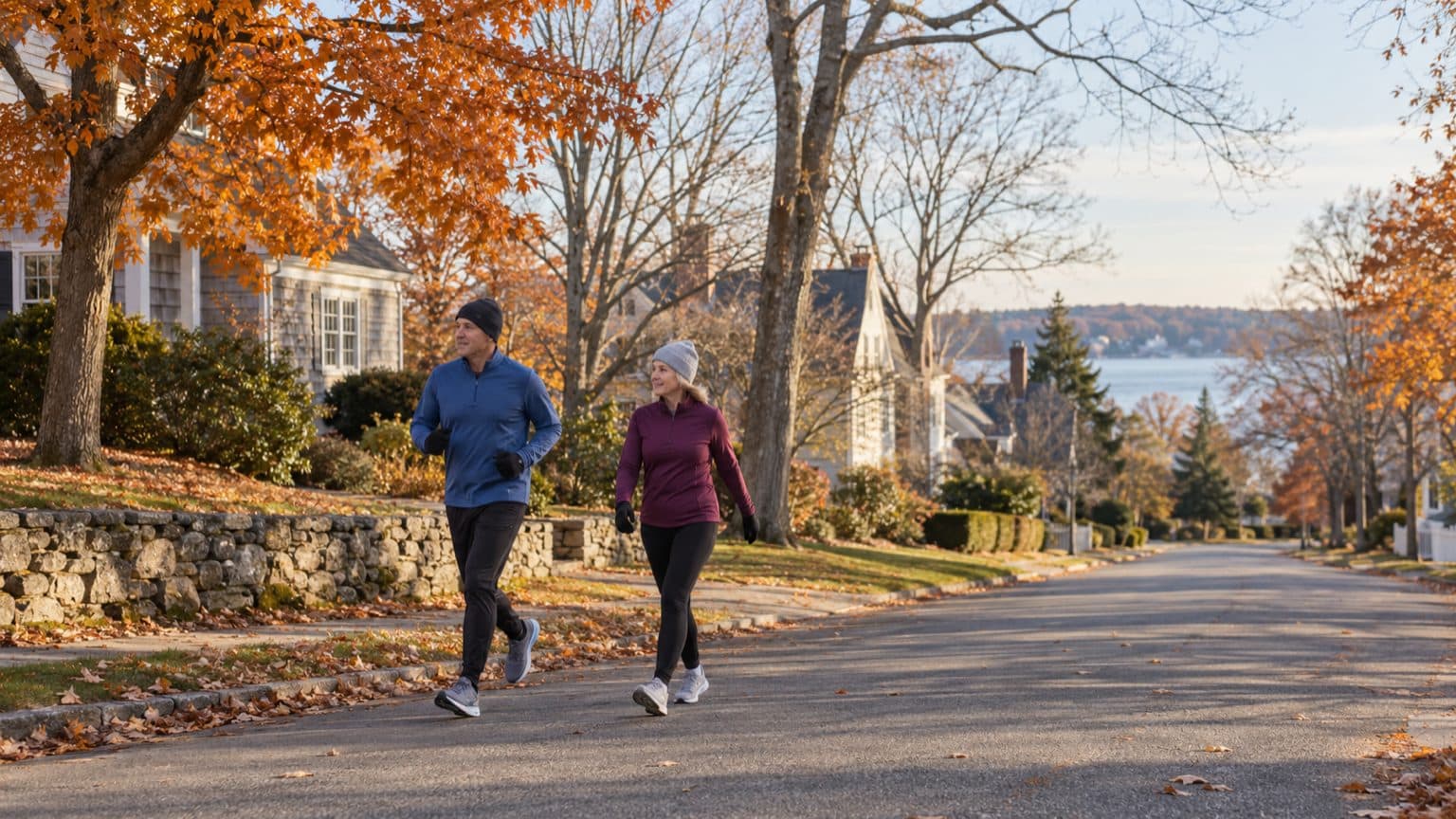
If you signed up for a Thanksgiving morning road race and haven't run in years, you have about seven weeks to get ready. Thanksgiving is Thursday, November 26.
Start from your current activity level and build up gradually. Whether that's enough time to run the whole race depends on where you're starting and how your body responds.
Should you check with a doctor before you start training?
Talk with your healthcare provider before you start if you have a chronic condition such as heart disease or diabetes, or symptoms such as chest pain, dizziness, or joint pain. The federal Physical Activity Guidelines for Americans say people with chronic conditions or symptoms should be under the care of a health care provider (opens in a new tab), and anyone who develops new symptoms while increasing activity should check with one.
If you have high blood pressure, diabetes, or a history of heart disease, or if you smoke, contact your doctor before vigorous activity. Otherwise, people without diagnosed chronic conditions or symptoms most likely don't need to check first. If you're not sure, call your provider's office and ask.
How much can you build up in seven weeks?
How much you can add depends on your usual activity level and the time you need to adapt. Injury risk is tied to the gap between what you usually do and the new level you're asking of your body.
If you haven't been active, start with activity at a moderate effort for your current fitness level. If your fitness is low, you may need light activity or a mix of light and moderate activity. Hold off on vigorous activity like running at first. Add minutes to each session and days to your week before you pick up the intensity.
Age probably affects how quickly you can move up. Youth and young adults can probably increase activity by small amounts every week or two, while older adults appear to need 2 to 4 weeks (opens in a new tab) to adapt to a new level. These are general estimates, not a plan for getting to race distance.
Walking the race counts, too. The Manchester Road Race welcomes walkers, and its course is 4.737 miles. Check your own race's distance and rules on walking before you decide how to take part, and build up your walking gradually, the same way you would running.
What does building up gradually look like?
Building up gradually means making each increase small and holding there until your body has adjusted. Shin splints often follow sudden changes in how often, how long, or how hard you exercise, such as running hills after only flat ground, and runners who suddenly increase their running program are more likely to get them. To prevent them, physical therapists recommend avoiding sudden increases, spreading out the days between activities, and cross-training.
Don't skip rest days. Your bones break down a little each time you run and build back up with rest and sleep. Sleeping less than 7 hours a night and skipping rest days are among the risk factors for bone stress injuries, along with worn-out shoes and hard surfaces like concrete. Softer surfaces, such as grass or a synthetic track, are easier on your legs when you can use them.
Bone stress injuries are often seen 3 to 4 weeks after someone starts a new exercise routine, so don't ignore pain in one spot along a bone at any point in your training.
Which running injuries are most common?
Runner's knee, Achilles tendon problems, plantar fasciitis, and shin splints are among the most common running injuries physical therapists help manage. About 40% of running injuries involve the knee (opens in a new tab).
Runner's knee usually causes a dull, aching pain in the front of the knee that comes on gradually. Stairs, squatting, or sitting a long time with your knees bent can make it hurt.
Achilles tendon irritation can cause morning pain and stiffness along the tendon and heel pain that gets worse with activity. Doing too much too quickly, such as adding a few miles to your daily run without giving your body time to adjust, can irritate the tendon.
Plantar fasciitis, small tears and inflammation in the tissue that connects your heel to the ball of your foot, affects about 15% of runners (opens in a new tab). It can be most painful with your first steps out of bed in the morning.
Shin splints cause pain along the inner edge of the shinbone that can occur during and after exercise. Running after an extended time off can bring them on.
These descriptions may help you explain your symptoms, but they can't tell you which problem you have. Shin pain, for example, can come from several conditions, including a stress fracture.
When should you stop and get medical care?
Stop exercising and call 911 (opens in a new tab) if you have sudden crushing, squeezing, tightening, or pressure in your chest, or pain that spreads to your jaw, left arm, or between your shoulder blades. Other possible heart attack symptoms (opens in a new tab) include nausea, sudden dizziness, sweating a lot for no reason, a rapid or irregular heartbeat, or shortness of breath at rest or with light activity. Call 911 any time you think you might be having a heart attack, even if you're not sure and even without chest pain.
If someone faints and isn't breathing, call 911 immediately and begin CPR (opens in a new tab). Also call 911 if they don't become alert within a couple of minutes, are over 50, or have diabetes, or if fainting comes with chest pain, a pounding or irregular heartbeat, or a seizure. MedlinePlus lists other reasons to call 911 after fainting. If none of those reasons apply, see a provider as soon as you can after a first fainting episode, repeated fainting, or new symptoms with fainting.
Sudden trouble walking, dizziness, or loss of balance can be a stroke warning sign (opens in a new tab). Call 911 for these sudden symptoms or other stroke signs, including trouble speaking, sudden weakness or numbness, or sudden vision changes.
Severe pain, swelling, a limb that looks out of place, or being unable to put weight on your leg can be signs of a broken bone (opens in a new tab). Stop exercising and get medical care promptly. Call 911 if bone is visible through the skin, bleeding is severe, the skin below an injured joint turns pale, cold, clammy, or blue, or you think the hip, pelvis, upper leg, head, neck, or back is broken. Don't move someone who may have a head, neck, or back injury. Also call 911 if the injured person is unresponsive or losing consciousness, or you can't keep the injured area still. A sudden pop in the back of your calf or heel may mean a torn Achilles tendon, so see your doctor immediately (opens in a new tab) if you think that has happened.
Some bone injuries build slowly. A bone stress injury may start as discomfort in one spot along a bone and can progress to pain with ordinary walking, a limp, or aching in bed at night. See your doctor or provider as soon as possible (opens in a new tab) if you think you have one. Exercising through the pain can lead to a crack in the bone, called a stress fracture.
What if something starts to hurt during training?
Contact your healthcare provider if new symptoms develop as you increase activity. If you suspect a bone stress injury, stop the activities that cause pain and get it checked as soon as possible.
With shin splints, don't go back to exercise until your provider says it's safe, since ramping up too soon can bring them back. One benchmark is being pain-free for at least 2 weeks (opens in a new tab) before you return, then coming back at a lower level and building up more slowly. In the meantime, ask your provider whether lower-impact activity like swimming or a stationary bike is OK.
That's hard to hear a few weeks before race day. Walking some of the course may still be possible, so check with your provider. If not, you can still cheer from the curb.
What should you wear and do on race morning?
Wear shoes you've already trained in, since Thanksgiving morning isn't the time to break in a new pair. If you need new ones, buy them a few weeks before the race so you have time to break them in.
Late November mornings in Connecticut can be cold. Dress in layers, because too much clothing can make you sweat and lose heat quickly. Wear a hat, cover your neck, and don't leave a gap of bare skin between your gloves and your sleeves.
Before the start, warm up for 5 to 10 minutes (opens in a new tab) by jogging or walking at a slower pace. After the finish, keep walking and gradually slow down for another 5 to 10 minutes so your heart rate can come down.
How can Omni help if an ache won't settle?
Omni's sports medicine care is for athletes of all ages and levels, including recreational players and weekend warriors. Knee and ankle injuries and overuse injuries are among the problems Omni treats. Omni's chiropractors also treat sports injuries, and chiropractic care is available at all five offices.
Whether you need a referral for sports medicine care depends on who delivers your care. Chiropractic care, including chiropractic-led sports medicine care, doesn't require a referral, though some insurance plans require one for coverage. Physical therapy is provided at the Wallingford office and always requires a physician's referral. If you don't have one yet, ask your physician. When you call, the staff can sort out what applies to you and verify your coverage.
If an ache is getting in the way of your training, call Omni at (203) 562-8600 or request an appointment. Let the team know your race date and what you hope to do on Thanksgiving morning.